Inviting God
What if the question isn't how do I carry this, but who carries this with me? Silvija Padjen-Pajovic on anxiety, control, and an unexpected kind of relief.
This is the first blog post from Silvija Padjen-Pajovic, AMFT, Associate Marriage and Family Therapist at Kainos. Silvija is relationally oriented and attachment-focused, with a particular interest in how meaning is made — and remade — through the therapeutic encounter. We’ve invited her to contribute to our blog on a regular basis, and we look forward to hearing from her. In this piece, she writes with unusual candor about her own experience of anxiety, and what began to shift when the question changed from how do I carry this to who carries this with me.
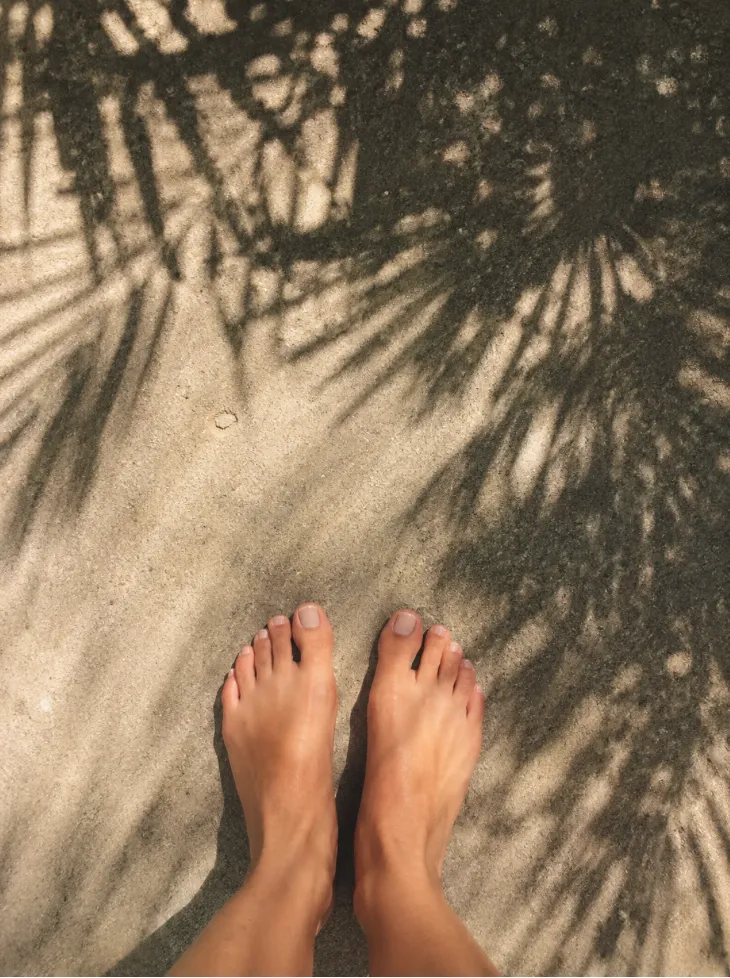
Most mornings began the same way. I would roll out of bed and hardly feel my own two feet on the ground. Every step forward felt tentative, as though I were making my way through a field of eggshells, each one capable of hatching another dreadful possibility. A palm frond might fall as I stepped outside. I might slip carrying my child down the apartment stairs. A car might drift onto the sidewalk at precisely the moment I crossed the street. If I climbed into someone else’s car, I couldn’t know whether that ride would be my last.
None of these thoughts stayed alone for long. Each one gave birth to another, until my life became less about living than anticipating every possible way it could unravel. I believed that if I could think far enough ahead, I might somehow outrun suffering. If I carried the burden carefully enough, perhaps it wouldn’t crush me.
So I made the burden smaller. I stopped driving. I crossed the street rather than walk beneath the palm trees. I declined invitations. I found reasons to stay home. Every accommodation felt reasonable in isolation, even responsible. I told myself this was simply wisdom. I was being careful. I was protecting myself.
Before long, my world had become very small. Strangely, the smaller it became, the heavier it felt. There was less life to carry, yet I carried it with greater effort. Come the pandemic, that shrinking was celebrated. Staying home, keeping distance, avoiding risk—these suddenly resembled virtues. But when the world finally opened again, I realized mine had never really closed because of a virus. It had been quietly narrowing long before that, until I could no longer tell the difference between being safe and simply being afraid.
What unsettled me most wasn’t that I had become anxious. It was that I had become incredibly good at managing it. I could anticipate it, accommodate it, even explain it to myself. Yet each accommodation quietly demanded another. Every answer gave rise to another question, every precaution another precaution. I wasn’t moving toward freedom. I was becoming increasingly fluent in my own captivity.
Eventually, I sat with all of those dreadful possibilities long enough to notice something unexpected. Insight wasn’t the missing piece. I could recognize the pattern. I could name the fear. I could even understand where it came from. But every insight still left me alone with the same question:
What do I do with all of this?
Somewhere in that exhaustion, another question quietly emerged.
Where is God in this?
Coming to know God was a slow unveiling, but the effect was profound. The first way I knew God was working in my life wasn’t that my circumstances changed. It was that anxiety no longer occupied the same place in me.
The evidence arrived quietly. I found it in ordinary moments that no longer asked so much of me.
One of those moments came after I was left without a car and had no choice but to rely on rideshares to get everywhere. Years earlier, this would have been unbearable. Sitting in the passenger seat felt like handing someone my life, and I had already decided that the safest solution was simply to stop letting other people drive me.
But somewhere between one ride and the next, I noticed something I hadn’t expected. The fear wasn’t gone. It simply no longer demanded the same authority. Nothing about the situation had changed. I was still climbing into a stranger’s car, still moving through Los Angeles traffic, still unable to control what might happen next. What had changed was where I believed my life ultimately rested.
“Your will, not mine,” stopped sounding like resignation.
It became relief.
I realized I had spent years asking the wrong question. How do I carry this? How do I become vigilant enough, careful enough, prepared enough to keep myself safe?
Faith gently turned the question inside out.
Not, How do I carry this?
But, Who carries this with me?
Sometimes I will sit across from someone carrying that same impossible weight. It may not look exactly like mine did. It may be grief that has nowhere to go, fear that has grown louder than hope, or uncertainty that has become too heavy to hold alone. But I recognize the look. The subtle uprootedness. The feeling of hardly inhabiting one’s own body, of living just a few steps ahead of the present moment.
We don’t rush to solve it.
We don’t begin by trying to think our way out of it. We make room for it. We name what has been carried for so long. We sit with the grief, the fear, the loneliness, the uncertainty. Sometimes we simply remain there together, resisting the urge to move too quickly toward an answer.
And somewhere in that staying, another question quietly becomes possible.
Where is God in this?
Not as an escape from what we are carrying, but as an invitation to discover that we were never meant to carry it alone.
We stay long enough for our feet to find the ground again.